Grease control on the cook line
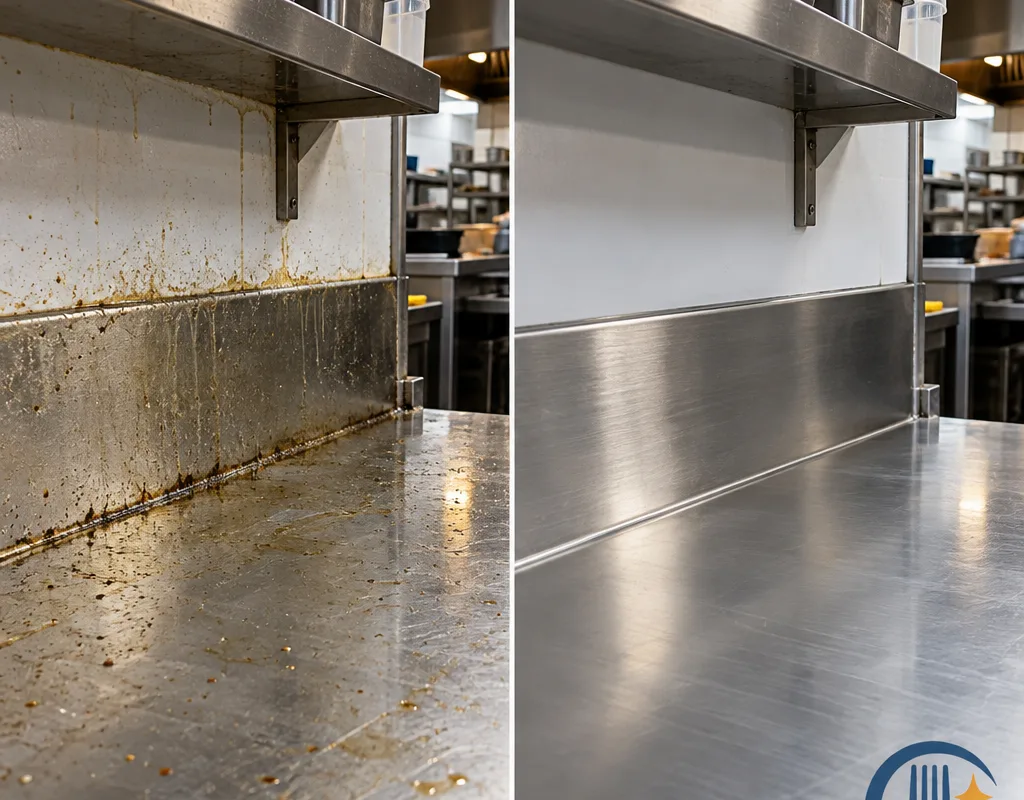
Grease does not stay on one surface. It migrates to adjacent stainless, wall areas, and floors, creating slip risk and attracting grime. Deep cleaning resets those surfaces so daily wipe-downs actually work.
Serving Albuquerque, New Mexico & surrounding areas
Mon–Fri 8am–6pm · Sat 9am–2pm
Equipment cleaning · Los Lunas
Keep cooking lines, prep areas, and back-of-house equipment clean enough for daily service and tough inspections. Our team handles the grease, carbon, and food soils that build up where your staff cannot stop to deep clean.
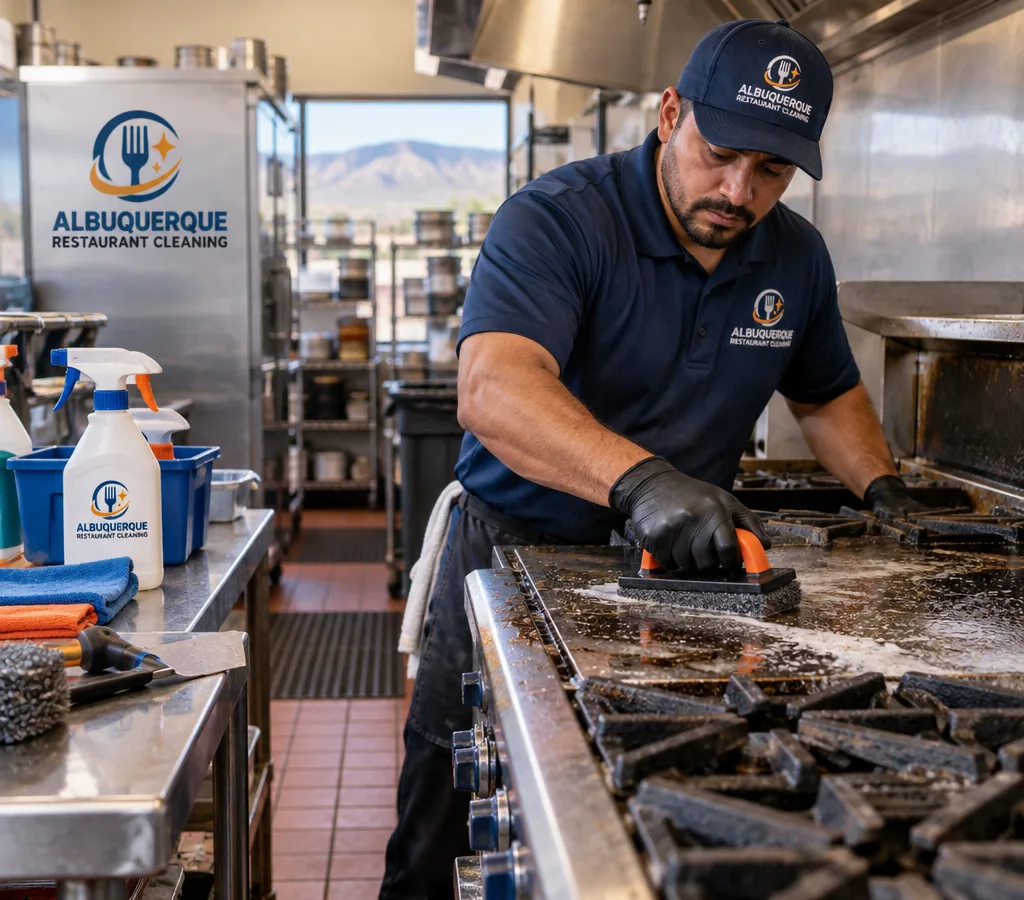
Restaurant Equipment Cleaning Los Lunas is about more than making the kitchen look better. It is about removing grease films, carbon, and baked-on food residue from the equipment and contact surfaces that affect sanitation, fire risk, odor, and how smoothly a shift runs.
Albuquerque Restaurant Cleaning serves Los Lunas from our Albuquerque location at 216 Menaul NE, Unit 5, with equipment-focused cleaning that fits real restaurant schedules. We work around service hours, protect food and storage areas, and leave your kitchen set back up for the next day.
If you need a team for broader, recurring work beyond equipment-focused deep cleaning, our professional restaurant cleaning is available for full-kitchen and facility support as well.
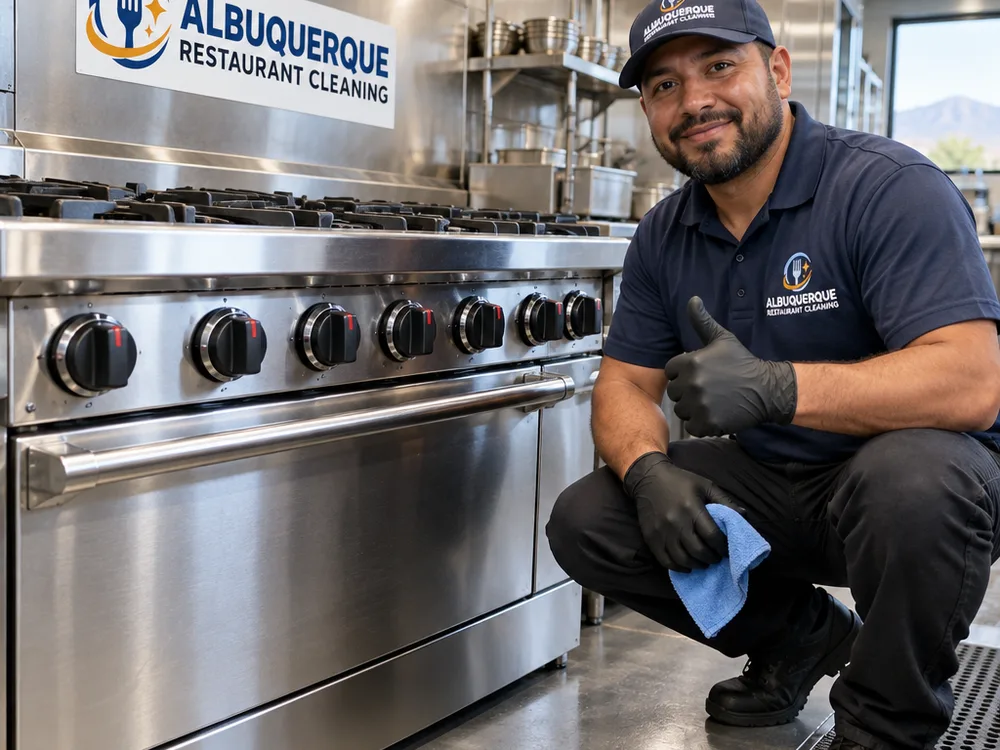
A proper equipment clean targets the places grime hides: seams, hinges, undersides, kick plates, vents, and the tight gaps between the cook line and walls. In Los Lunas kitchens, the heaviest buildup usually shows up around the range, fryer area, charbroiler, and the stainless panels that take constant splatter.
Typical scope can include:
What this service generally does not include is equipment repair, duct or hood system certification work, or altering equipment installation. If something is unsafe to move, we clean what can be accessed, then recommend a safe plan to reach hidden areas without damaging gas lines, electrical connections, or flooring.
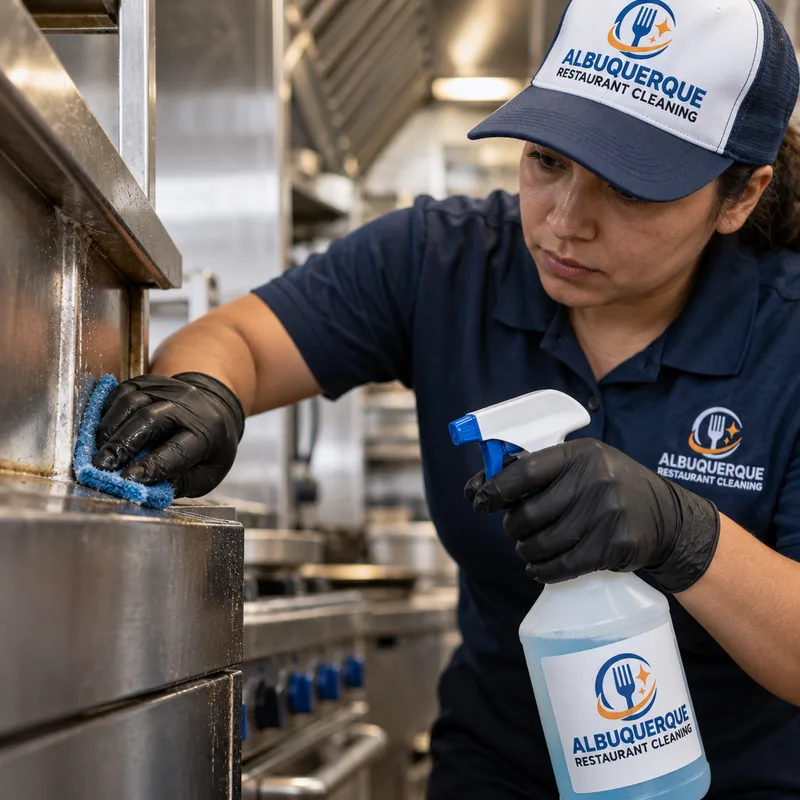
Grease does not stay on one surface. It migrates to adjacent stainless, wall areas, and floors, creating slip risk and attracting grime. Deep cleaning resets those surfaces so daily wipe-downs actually work.
Inspectors notice buildup on handles, hinges, gaskets, undersides, and splash zones. We focus on the details that are easy to miss during a rush but easy to cite during an inspection.
Sticky floors near fryers and residue around equipment bases are common trouble spots. Cleaning those areas improves traction and reduces cross-contamination risks in busy back-of-house traffic.
Carbon and grease on hot surfaces can smoke and smell during service. Removing that baked-on layer helps reduce the burnt-oil smell that can linger on the line.
Using the right chemistry and tools for stainless, enamel, and coated surfaces prevents scratching and dulling while still removing heavy soils.
We confirm which equipment and adjacent surfaces are included, what can be safely accessed, and any constraints like tight clearances, sensitive finishes, or fixed equipment.
We keep cleaning activity away from exposed food and packaging, cover nearby items as needed, and stage tools so the kitchen stays organized.
We remove grease films and carbon with food-appropriate degreasers and non-scratch tools where required, then rinse or wipe down to remove residues.
We focus on the perimeter zones where grime collects: behind and beside equipment when accessible, baseboards, kick plates, corners, and splash areas.
We return movable items to position as safety allows, confirm surfaces are clean and dry, and review any problem areas that may need a recurring schedule.
Restaurant equipment cleaning in Los Lunas typically ranges from about $250 to $900+ per visit, depending on how many pieces are included and how heavy the grease and carbon buildup is. Smaller scopes—a short cook line and prep area—fall on the lower end, while a full line with multiple hot units, heavy buildup, and detailed perimeter work runs higher.
Final pricing changes with access, including tight installs and fixed equipment, how much detail work is required on seams and undersides, and whether cleaning can be done after-hours. The exact cost is confirmed after a quick walk-through to set a written scope that matches your kitchen.
Most kitchens do best with a recurring deep clean that matches volume and menu, often monthly or quarterly, with extra attention for fryer and grill stations. If you cook high-grease foods daily, buildup returns fast around the cook line and floor edges, so a shorter interval helps keep daily wipe-downs effective.
Yes, as long as the area can be safely accessed and cooled, we can stage the work to focus on one part of the line at a time. Many restaurants schedule after-hours or slower days so hot surfaces are cool, staff traffic is minimal, and we can detail the perimeter zones without interrupting service.
We only move equipment when it is safe to do so and when it will not risk gas, electrical, or plumbing connections. If a unit is fixed, boxed-in, or has limited slack on lines, we clean what is reachable and document what would require a qualified disconnect and reconnect to access fully.
Food-contact and splash-zone surfaces are cleaned using appropriate products and then rinsed or wiped down to remove residues. We also avoid spraying into open food, packaging, or clean dish areas, and we set up the work zone so cleaning chemistry stays controlled.
Equipment cleaning is a deep, detail-focused service aimed at removing grease and carbon from specific units and the surfaces immediately around them. General restaurant cleaning is broader and may include routine floors, restrooms, dining areas, and overall back-of-house upkeep, depending on your needs and schedule.
A clear list of which equipment is included, any access restrictions, and a plan for when equipment can be cool and reachable is usually enough. If you can clear small items off prep surfaces and secure food and packaging, it speeds up setup and keeps the workflow smooth.
Share your equipment list, hours, and the trouble spots you want handled. We will recommend a practical cleaning plan and a cadence that keeps grease buildup under control without disrupting service.